Water Extraction in Castle Rock, CO
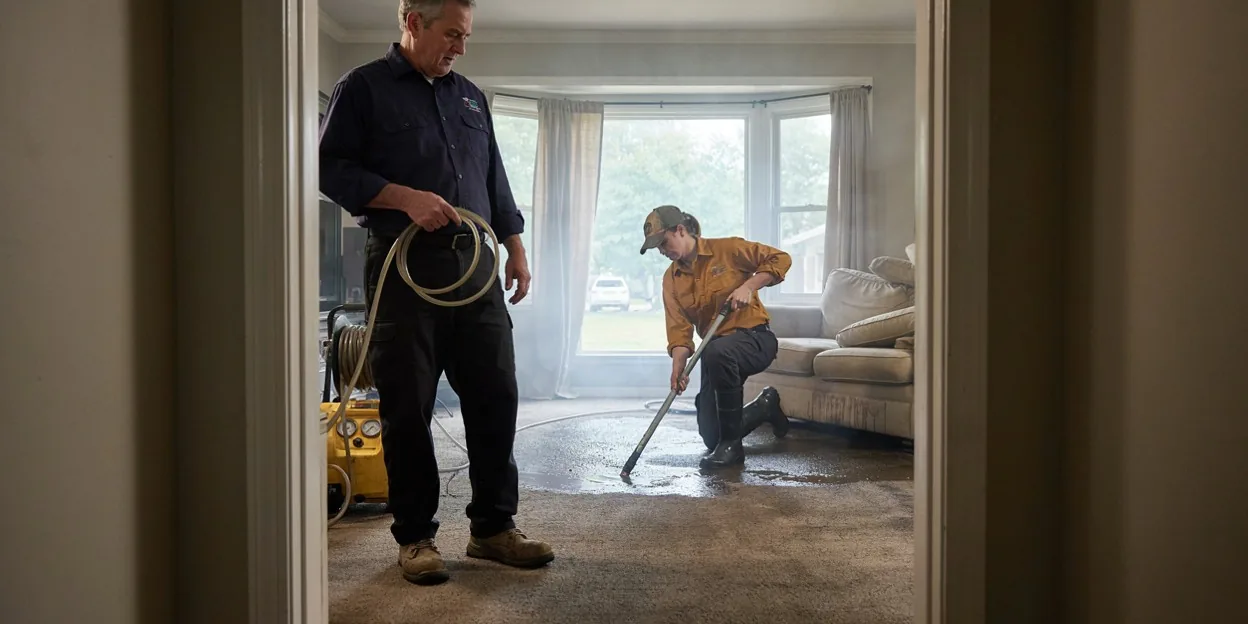
The washer hose let go on the second floor of a two-story in The Meadows and ran for most of a workday. The laundry room, the hall, the kitchen ceiling, and the basement family room below it are all wet, and the shop vac gave up after four buckets. This site connects you by phone with an independent local provider who extracts water from homes in Castle Rock and across Douglas County.
Where the water sits, and where it went that you cannot see
The crew starts with the source confirmed off, then walks each floor with a moisture meter before the hoses come in. On the main floor they read the subfloor under the laminate and the base of the cabinets. In the basement they read the ceiling drywall and the carpet pad below it. Water that came through the floor above rarely lands where the stain is, so the readings map the real footprint.
Then extraction begins. A truck-mounted unit pulls water from carpet and pad with enough vacuum to lift it from the slab underneath. Weighted extraction tools press the carpet down so the pad gives up its water instead of holding it. Hard floors get squeegeed to the wand, and the crew checks the cabinet toe kicks and the bottom of the stair stringers, which hold water for days.
What to do while the truck is on its way
Close the valve behind the washer or the main on the basement wall. Kill the breaker for any outlet under water. Take photos of every wet room, then move small furniture and boxes onto dry floor and put foil or plastic under the legs of anything too heavy to move. Pull towels and rugs up so they do not wick more water into the floor.
Leave the carpet in place and skip the box fan for now. A fan on wet carpet pushes moisture into the drywall and does not remove a drop. If the ceiling below the leak is bulging, put a bucket under it and stay out from beneath it.
After the puddle: what the readings say about the floor and the walls
Extraction takes out the water you can see. The drying that follows takes out the water you cannot, and the crew sets structural drying equipment the same visit. Carpet that was extracted the same day is usually saved. The pad under it is replaced if the water was groundwater or ran for more than a day, and often dried in place if it was clean and caught early.
Laminate flooring that swelled at the seams comes up. Hardwood gets metered and, when the readings allow, dried with mats rather than replaced. Drywall that reads wet above the baseboard is cut at a straight line above the highest reading, and the ceiling below a leak is opened where it stained so the joist bay can dry. The crew shows you the readings behind each decision.
Dry air, thin air, and a lot of finished basement
Castle Rock homes carry a lot of square footage below grade, and in a two-story house a leak upstairs has two floors to fall through. Most of the town's housing went up after 1980, with carpet over pad in the basement, laminate or engineered wood on the main floor, and a laundry room on the second floor in the newer subdivisions. That layout puts the extraction job on three levels at once.
The climate helps and hurts. Air at 6,200 feet is dry and thin, which lets an open room dry quickly once the water is out. A closed basement with no windows does not get that help, and it holds humidity until a dehumidifier takes it out. A summer hailstorm that opens a roof adds a fourth level to the problem, and roof leak water damage cleanup covers the attic and ceiling side of that.
Many homeowner policies treat a failed hose or a burst line as a sudden loss, and gradual leaks are often excluded. Nobody on this site can read your policy, and the provider cannot either. What they can do is document each room, log the readings, and write the scope your adjuster will ask for.
When you call about standing water
Say which floor the water is on, whether it came from an appliance, a pipe, or the sump, and whether it is still running. Mention if the ceiling below is stained or sagging and whether the basement is finished. Call (303) 647-9733.