Basement Flooding Cleanup in Castle Rock, CO
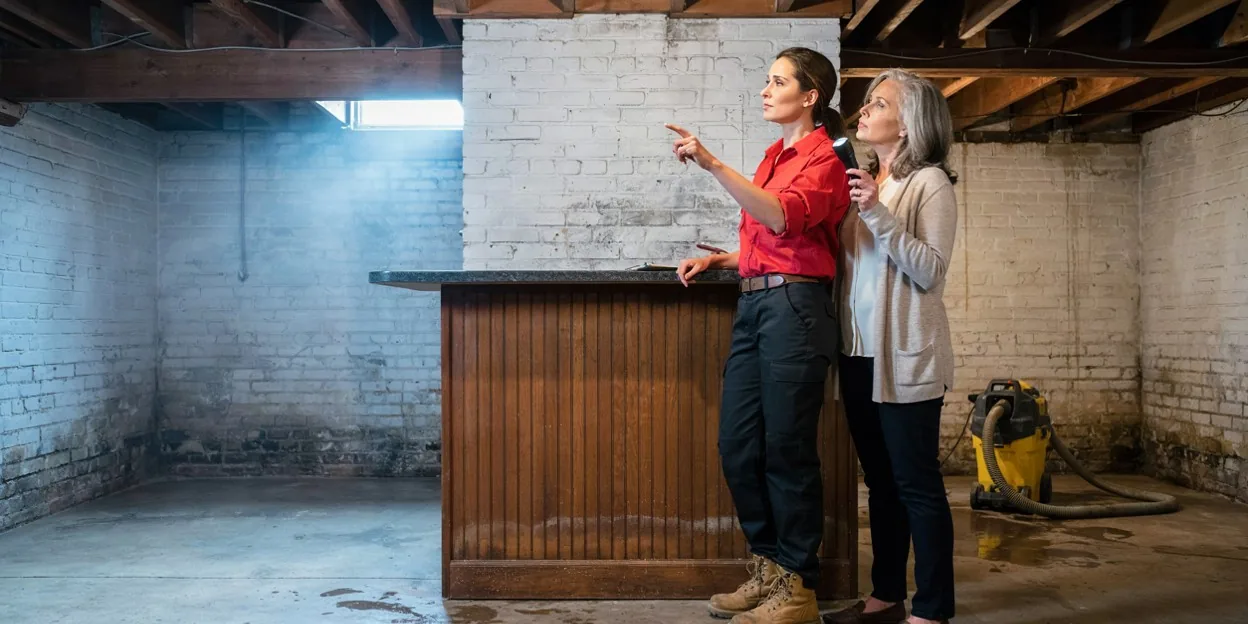
You went downstairs to grab a suitcase and the carpet squished under the laundry-room door. The storage room floor is shining, the boxes on the bottom shelf are dark halfway up, and the sump pit in the corner is full to the lip. This site connects you by phone with an independent local provider who cleans up flooded basements in Castle Rock and across Douglas County.
Sump, seepage, or the pipe upstairs: naming the source before the pump truck starts
The crew's first question is where the water came from, because that decides how the basement gets handled. A full sump pit with a silent pump means groundwater, and it will keep coming until the pump runs again. A wet line along the base of the foundation wall after a snowmelt week means seepage through the clay. A ceiling drip under the kitchen means a supply line, and the main has to be closed before anything else happens.
Then the extraction starts. Truck-mounted units pull the water off carpet and pad, and a squeegee wand clears the bare slab in the mechanical room. The crew meters the bottom plate of every framed wall, the drywall behind the baseboard, and the underside of the stairs. Finished basements hide most of their water behind finishes, so the readings do the looking.
Ten minutes of your own work before the crew arrives
Close the main if the water came from a pipe. Switch off the breaker for any outlet or appliance sitting in water. Carry what you can up the stairs, but photograph every room first, including the water line on the boxes. Open the closet and storage-room doors so air moves. Unplug the dehumidifier you keep down there if its cord runs through the water.
Leave the carpet down. Pulling it yourself tears the pad and spreads the water into rooms that were dry. If the water is from the sump or a floor drain, keep kids and pets upstairs until the crew has looked at it, because groundwater that came through a drain line is not clean.
What a Castle Rock finished basement keeps and what it loses
Carpet over a slab often dries in place if the crew reaches it within a day or two and the water was clean. The pad under it almost never does, and it usually comes out so the carpet can be floated and dried from below. Drywall that wicked more than a few inches is cut at a clean line above the reading, and the wet insulation behind it goes with it.
Framing dries in place nearly every time. Laminate and engineered wood on a basement slab are the question marks, and the crew meters them before anyone pulls a plank. Once the standing water is gone, structural drying is the rest of the job, with dehumidifiers sized for a closed basement in dry mountain air.
Why the basement is where Castle Rock water ends up
Castle Rock houses built from the 1980s on stand on bentonite clay that swells when it gets wet, so the builder put in a perimeter drain and a sump pit to keep water off the foundation. That drain does its job, and every gallon it collects passes through the pit. When the pump loses power in a March blizzard or a float sticks during April melt, the water comes up through the pit and out across the floor. Sump pump failure cleanup is the most common version of this call.
The other version is seepage. Clay drains slowly, so a downspout that dumps beside the foundation keeps the soil against the wall saturated for days. The water finds a crack or a cold joint and shows up as a damp line along the base of the wall. That is a grading and gutter problem as much as a cleanup problem, and the crew will tell you so.
Sudden losses such as a burst line are often covered under homeowner policies. Groundwater and sump overflow usually need a separate endorsement. What your policy says is not something this site can tell you. Ask the crew to log the date, the readings, and the photos so your adjuster has a file to read.
Calling about a flooded basement in Castle Rock
Say whether the basement is finished, whether the sump pump is running, and whether the water is still rising. Mention what is stored down there and whether the furnace or water heater is standing in water. Call (303) 647-9733.